Did you know there are very few books that start with "Y"? Many start with You and Your and many also start with Year or Years. None of them fall into the category of a novel or travel literature, more like self-help.
Yes, I wrote about Peter Mayle so using A Year in Provence for my "Y" entry is redundant. My blog, my thoughts. Here is a reading guide for A Year in Provence. Reading guides always make homework easier because they make you think through what you read. Everyone should do their homework before leaving on a trip. Not just the homework on transportation (how), accommodations, food, and sites, but the people, weather, and history. Which is why I like to read novels, it makes the homework easier and more enjoyable.
My first trip to Europe was with my high school history teacher, Mrs. Sue Rathburn. She was crazy with crazy curly hair and bright red lipstick. Mrs. Rathburn was also enthusiastic and excited to show us (a group of about 15 students) everything. Right before we left, she gave us a packet of questions to answer before we left. None of us did it; we were teenagers and it was summer. Now I wish I had so I would have understood more about the history and people in London, Paris, Rome, Florence, Venice, Vienna, and Munich. Too late now. Guess I'll just have to return to those places. Darn.
Showing posts with label Novel Travels. Show all posts
Showing posts with label Novel Travels. Show all posts
Saturday, August 22, 2009


Friday, August 21, 2009
Novel Travels: Wuthering Heights
Visiting the Bronte Parsonage Museum in Haworth gives a sense of deja vu. It's hard to visit and not see Heathcliff and Catherine walking around the moor. I loved visiting the Parsonage and I loved Wuthering Heights, which is why it is the "W" on this list.
The Bronte Parsonage Museum is in Haworth. In 1998, getting there from London meant taking a train to Leeds and a bus from the train station to Haworth. I also discovered walks--rambles--in the area and stomped around for a few hours before heading back to London. If possible, I try to walk everywhere I visit. If I am with my husband, walking and using public transportation is guaranteed. He says public transportation is always reliable, unlike cabs where the driver can go where he/she wants, public transport has to go one way and has to be on time. The only problem I have when traveling with my husband is that selecting a restaurant to eat at is impossible. We walk and walk and walk, look at menus, look online. And walk and walk and usually end up right where we started. That's why the walks in Yorkshire are good, you want to end up where you started, back at the Parsonage Museum (which has a blog).
The Bronte Parsonage Museum is in Haworth. In 1998, getting there from London meant taking a train to Leeds and a bus from the train station to Haworth. I also discovered walks--rambles--in the area and stomped around for a few hours before heading back to London. If possible, I try to walk everywhere I visit. If I am with my husband, walking and using public transportation is guaranteed. He says public transportation is always reliable, unlike cabs where the driver can go where he/she wants, public transport has to go one way and has to be on time. The only problem I have when traveling with my husband is that selecting a restaurant to eat at is impossible. We walk and walk and walk, look at menus, look online. And walk and walk and usually end up right where we started. That's why the walks in Yorkshire are good, you want to end up where you started, back at the Parsonage Museum (which has a blog).
Saturday, August 15, 2009
Novel Travels: Six Wives
I'm having to get creative with the last few letters of the alphabet.
Ever since Phillipa Gregory's The Other Boleyn Girl came out and the Tudors hit Showtime, Henry VIII is everywhere with his wives. Suddenly, bookstore shelves are buckling under the weight of the Tudor Era novels, many re-imagining and re-tellings (not a word, really) of stories about Henry VIII's wives. Many of the books (I've not read many) give a good sense of a woman's powerlessness at that time in history. And those books are probably good airplane reading.
Long before The Other Boleyn Girl I studied in London for a summer. My goal, besides learning about politics and media, was to visit the graves of each of Henry VIII's six wives. Antonia Fraser's The Wives of Henry VIII made this possible by the photographs and captions of all the grave sites.
Catherine of Aragon is in Peterborough Cathedral.
Anne Boleyn lies in the Tower of London, in the Chapel of St. Peter ad Vincula.
Jane Seymore is buried with Henry VIII in St. George's Chapel at Windsor Castle.
Ann of Cleves is in Westminster Abbey.
Katherine Howard is also in the Chapel of St. Peter ad Vincula.
Catherine Parr lies in the Chapel at Sudley Castle.
Reminder: Divorced, Beheaded, Died, Divorced, Beheaded, Survived.
I also recommend Alison Weir's The Six Wives of Henry VIII. I'm looking forward to reading David Starkey's The Queens of Henry VIII.
Ever since Phillipa Gregory's The Other Boleyn Girl came out and the Tudors hit Showtime, Henry VIII is everywhere with his wives. Suddenly, bookstore shelves are buckling under the weight of the Tudor Era novels, many re-imagining and re-tellings (not a word, really) of stories about Henry VIII's wives. Many of the books (I've not read many) give a good sense of a woman's powerlessness at that time in history. And those books are probably good airplane reading.
Long before The Other Boleyn Girl I studied in London for a summer. My goal, besides learning about politics and media, was to visit the graves of each of Henry VIII's six wives. Antonia Fraser's The Wives of Henry VIII made this possible by the photographs and captions of all the grave sites.
Catherine of Aragon is in Peterborough Cathedral.
Anne Boleyn lies in the Tower of London, in the Chapel of St. Peter ad Vincula.
Jane Seymore is buried with Henry VIII in St. George's Chapel at Windsor Castle.
Ann of Cleves is in Westminster Abbey.
Katherine Howard is also in the Chapel of St. Peter ad Vincula.
Catherine Parr lies in the Chapel at Sudley Castle.
Reminder: Divorced, Beheaded, Died, Divorced, Beheaded, Survived.
I also recommend Alison Weir's The Six Wives of Henry VIII. I'm looking forward to reading David Starkey's The Queens of Henry VIII.
Novel Travels: Dr. Zhivago
A few weeks before I left for a cruise which stopped in Russia I tried to read Dr. Zhivago. I failed. Then I tried to watch the movie. I fell asleep. Twice. So when I return to Russia, I plan on reading this book. (And probably consulting the Sparknotes.)
The reason I'm including Dr. Zhivago, even though I've not read it, is because the Russians have adopted the music for tourist areas. Lara's Theme played on the bus and at restaurants. Musicians played the song. That's interesting to me because my copy of the book says it (the book) was banned in Russia when it was published. That's true, according to the Wiki page.
Honestly, when I return to Russia, I'll read Anna Karenina first, then Dr. Zhivago. I'd like to say I'll read War and Peace before leaving, but I have a life, no time, and there are several movie versions. Plus, I need a plane ticket.
The reason I'm including Dr. Zhivago, even though I've not read it, is because the Russians have adopted the music for tourist areas. Lara's Theme played on the bus and at restaurants. Musicians played the song. That's interesting to me because my copy of the book says it (the book) was banned in Russia when it was published. That's true, according to the Wiki page.
Honestly, when I return to Russia, I'll read Anna Karenina first, then Dr. Zhivago. I'd like to say I'll read War and Peace before leaving, but I have a life, no time, and there are several movie versions. Plus, I need a plane ticket.
Novel Travels: Ulysses
I'm skipping T right now.
Full confession: I didn't read James Joyce's infamous Ulysses before going to Dublin. Instead, I listed to it on CD and watched the Bloom, relying on Sparknotes to interpret both. I am glad I did because I could not get past the first chapter and it was much easier to be passive than active about this book.
What is interesting to me is how Leopold Bloom's ordinary day, June 16, 1904, has spawned Bloomsday in Dublin. On Bloomsday, Joyce enthusiasts follow Bloom's footsteps for that day--they travel around the city visiting the places he visits and going where he goes. It's a good tour of the city itself AND how it has changed. Which is why I recommend listening to (or reading) Ulysses.
Ulysses walk. Ulysses walk with transportation notes. Downloads. There was even a Twitter performance.
 One thing people should know about Ireland is that pubs are closed on Good Friday. No alcohol sales anywhere. At all. Just FYI.
Full confession: I didn't read James Joyce's infamous Ulysses before going to Dublin. Instead, I listed to it on CD and watched the Bloom, relying on Sparknotes to interpret both. I am glad I did because I could not get past the first chapter and it was much easier to be passive than active about this book.
What is interesting to me is how Leopold Bloom's ordinary day, June 16, 1904, has spawned Bloomsday in Dublin. On Bloomsday, Joyce enthusiasts follow Bloom's footsteps for that day--they travel around the city visiting the places he visits and going where he goes. It's a good tour of the city itself AND how it has changed. Which is why I recommend listening to (or reading) Ulysses.
Ulysses walk. Ulysses walk with transportation notes. Downloads. There was even a Twitter performance.
 One thing people should know about Ireland is that pubs are closed on Good Friday. No alcohol sales anywhere. At all. Just FYI.
Novel Travels: The Shadow of the Wind
Barcelona again. I guess that city just inspires artists and writers. The Shadow of the Wind by Carlos Ruiz Zafon is a thriller for book lovers. Young Daniel takes a book by Julián Carax from the Cemetery of Forgotten Books and becomes obsessed with finding other books by the author, but finds they are being burned by an unknown person. His determination to get to the bottom of the mystery will threaten his life.
Characters in the novel travel up, down, and around Barcelona, making it a pretty good book to read before visiting the city. La Rambla, Montjuic, Santa Maria del Mar ... it's all here.
Two things I should mentions. 1) The Shadow of the Wind portrays Barcelona as a dark and shadowy place. A place where people follow you without reason. The city I visited was bright and colorful. Although we did get pick pocketed. 2) In the novel, it seems to constantly rain or snow. I visited Barcelona in January and the weather was wonderful.

List of places in the book. Another list, but with a map.
Characters in the novel travel up, down, and around Barcelona, making it a pretty good book to read before visiting the city. La Rambla, Montjuic, Santa Maria del Mar ... it's all here.
Two things I should mentions. 1) The Shadow of the Wind portrays Barcelona as a dark and shadowy place. A place where people follow you without reason. The city I visited was bright and colorful. Although we did get pick pocketed. 2) In the novel, it seems to constantly rain or snow. I visited Barcelona in January and the weather was wonderful.

List of places in the book. Another list, but with a map.
Novel Travels: Various books, Various resources
It's hard to explain how I find books to read about certain destinations. Sometimes, I just look things up on Amazon and hope someone has made a list. I also visit Literary Traveler for clues. My favorite, albeit opinionated, travel writer Rick Steves will sometimes list books for each country. Lonely Planet does the same thing, if you dig around on their website. Knowing that there is a slim chance of finding something, but if a book is good it will be listed, I go to the Recommended Reading link at Pemberley and look at the World Literature category. Finally, secretly, I visit the Special Settings list at Laurie Likes Books.
I also like the Travelers' Tales Guides--the one on Provence had a story about the Roman aqueduct right next to our hotel. I've also found this Wall Street Journal article on Major Cultural Routes (starting with Mozart's footsteps) useful in leading me to other paths.
In no particular order, here are some other books I recommend:
For England, any of Susan Allen Toth's England books.
For Ireland: Trinity by Leon Uris (OK, I've attempted it twice, but it's been recommended to me several times.)
For Paris: Dan Brown's The Da Vinci Code. (That's a given.)
For Rome: Angels and Demons by Dan Brown (Given.)
For Italy: Where Angels Fear to Tread by E.M. Forester and Under the Tuscan Sun by Frances Mayes (Again, given).
For Russia: A Traveller's History of Russia by Peter Neville.
For Thailand: Bangkok 8 by John Burdette. And The Beach by Alex Garland.
Eugenia Price's Savannah series gets an honorable mention for best series about a charming, Southern city.
I also like the Travelers' Tales Guides--the one on Provence had a story about the Roman aqueduct right next to our hotel. I've also found this Wall Street Journal article on Major Cultural Routes (starting with Mozart's footsteps) useful in leading me to other paths.
In no particular order, here are some other books I recommend:
For England, any of Susan Allen Toth's England books.
For Ireland: Trinity by Leon Uris (OK, I've attempted it twice, but it's been recommended to me several times.)
For Paris: Dan Brown's The Da Vinci Code. (That's a given.)
For Rome: Angels and Demons by Dan Brown (Given.)
For Italy: Where Angels Fear to Tread by E.M. Forester and Under the Tuscan Sun by Frances Mayes (Again, given).
For Russia: A Traveller's History of Russia by Peter Neville.
For Thailand: Bangkok 8 by John Burdette. And The Beach by Alex Garland.
Eugenia Price's Savannah series gets an honorable mention for best series about a charming, Southern city.
Novel Travels: A Room With a View
Want to wander around Italy during the Victorian Era? Read A Room With a View by E.M. Forster. It's an easy, amusing read about repression and finding your place in the world. Characters walk around Florence, witness a murder, propose, and kiss. When I read it, I didn't expect it to be so funny.
The movie is wonderful eye candy.
The movie is wonderful eye candy.
Friday, August 14, 2009
Novel Travels: Queen Margot
In 2007 my husband and I flew to Arizona to visit his family and to attend the Fiesta Bowl. This was the infamous game between the University of Oklahoma Sooners and the Boise State Broncos. For three quarters I was bored and wishing I had brought my book, Queen Margot. It's the only time I recall wanting to read while attending a football game. In the fourth quarter, things got exciting, really exciting. Goes down in history exciting. A good game from the fourth quarter on with an unexpected finish. However, I digress.
Honestly, Queen Margot by Alexandre Dumas is not a good travel book. For one thing, it is huge and for another, it deviates from history and does not have special insight into the people or an area of France--things which I prefer to find in literature I read while traveling. What it did do was drive me to read about the real Margurite de Valois, queen of France and Navarre in the late 16th century, the Saint Bartholomew's Day massacre of Huguenots in Paris after her marriage to Henry de Bourbon. Queen Margot had me googling Navarre and Huguenots making this book more educational for me, as if I were back in high school and preparing for an essay test. I would have failed that test though, because I found the conspiracies and plot twists of who was spying on who (whom?) impossible to keep up with, even after I saw the movie.
I'd like to read more by Dumas. Maybe I'll read The Three Musketeers when I return to France, someday.
Honestly, Queen Margot by Alexandre Dumas is not a good travel book. For one thing, it is huge and for another, it deviates from history and does not have special insight into the people or an area of France--things which I prefer to find in literature I read while traveling. What it did do was drive me to read about the real Margurite de Valois, queen of France and Navarre in the late 16th century, the Saint Bartholomew's Day massacre of Huguenots in Paris after her marriage to Henry de Bourbon. Queen Margot had me googling Navarre and Huguenots making this book more educational for me, as if I were back in high school and preparing for an essay test. I would have failed that test though, because I found the conspiracies and plot twists of who was spying on who (whom?) impossible to keep up with, even after I saw the movie.
I'd like to read more by Dumas. Maybe I'll read The Three Musketeers when I return to France, someday.
Tuesday, August 11, 2009
Novel Travels: Peter Mayle
Somehow in the summer of 2006 I managed to plan a wedding, study for the GRE, train for a sprint triathlon, swim twice a week, play soccer every weekend and work full time. While doing all of the above, I also managed to read most of Peter Mayle's Provence books.
I read these books like I drink wine, slowly and without wasting a drop. My future husband was giving into my fantasy of taking a cycling tour through Provence, France, and I was determined to know everything about the area. Mayle's books had been in the media for years so they were the first ones I looked for at the library. First, I read A Year in Provence, followed by Toujours Provence. Then I discovered Mayle's fiction and that he had other non-fiction (but not autobiographical) books about Provence too. Below are my thoughts on his books.
Autobiographical Works
A Year in Provence: Easy and enjoyable to read. Mostly about Mayle and his wife renovating a house in Provence. It was made into a miniseries, which oddly, I was able to find. I don't remember much about it except the Peter character waving his arms around in every scene.
Side Note" In it, Mayle writes about Le Mistral (basically, the strong winds), which I should have taken as a warning that Provence has strong winds. Strong winds did not play into my fantasy about a fun bicycle ride through waving lavender.
Toujours Provence: Much of the same, though I had to wander why they left Provence in the first place (then returned in this book) after the large hassle in the previous book. Or was than Encore Provence? Here's the problem, all the books run together after a while.
Fiction Novels
Hotel Pastis: A formed advertising executive buys a hotel. Chaos ensues.
Anything Considered: A man with few options left puts out an ad that he will do anything. A rich man answers the ad. Chaos ensues.
Chasing Cézanne: I don't recall reading this. I'm sure art is involved and chaos ensues.
A Good Year: An English executive inherits his uncle's home and vineyard in Provence. There are secrets, sections about wine making, and chaos ensuing. Mayle's novel differs from the plot of the movie as I don't recall the memory of the uncle playing such a big part and know the wine plot was different.
Other works
French Lessons: Adventures with Knife, Fork, and Corkscrew: I remember reading this, I remember reading about escargot. I don't remember much else.
Confessions of a French Baker: I tried to read this, but I got married and had to return it to the library.
Acquired Tastes: I've not read this.
Provence A-Z: I read this, but I felt I had read it all before in all of the above books.
Did reading Mayle's books help me learn about Provence? Well, yes, as an outsider. Almost all of them have an element of an outsider coming in and getting caught up in chaos in Provence. Did I learn about the people? Somewhat, mostly in his autobiographical works. Would I read them again? Yes, they were more fun than GRE vocabulary flashcards. Would I return to Provence? In a heartbeat, especially when the lavender blooms or the Tour de France is passing through.
I read these books like I drink wine, slowly and without wasting a drop. My future husband was giving into my fantasy of taking a cycling tour through Provence, France, and I was determined to know everything about the area. Mayle's books had been in the media for years so they were the first ones I looked for at the library. First, I read A Year in Provence, followed by Toujours Provence. Then I discovered Mayle's fiction and that he had other non-fiction (but not autobiographical) books about Provence too. Below are my thoughts on his books.
Autobiographical Works
A Year in Provence: Easy and enjoyable to read. Mostly about Mayle and his wife renovating a house in Provence. It was made into a miniseries, which oddly, I was able to find. I don't remember much about it except the Peter character waving his arms around in every scene.
Side Note" In it, Mayle writes about Le Mistral (basically, the strong winds), which I should have taken as a warning that Provence has strong winds. Strong winds did not play into my fantasy about a fun bicycle ride through waving lavender.
Toujours Provence: Much of the same, though I had to wander why they left Provence in the first place (then returned in this book) after the large hassle in the previous book. Or was than Encore Provence? Here's the problem, all the books run together after a while.
Fiction Novels
Hotel Pastis: A formed advertising executive buys a hotel. Chaos ensues.
Anything Considered: A man with few options left puts out an ad that he will do anything. A rich man answers the ad. Chaos ensues.
Chasing Cézanne: I don't recall reading this. I'm sure art is involved and chaos ensues.
A Good Year: An English executive inherits his uncle's home and vineyard in Provence. There are secrets, sections about wine making, and chaos ensuing. Mayle's novel differs from the plot of the movie as I don't recall the memory of the uncle playing such a big part and know the wine plot was different.
Other works
French Lessons: Adventures with Knife, Fork, and Corkscrew: I remember reading this, I remember reading about escargot. I don't remember much else.
Confessions of a French Baker: I tried to read this, but I got married and had to return it to the library.
Acquired Tastes: I've not read this.
Provence A-Z: I read this, but I felt I had read it all before in all of the above books.
Did reading Mayle's books help me learn about Provence? Well, yes, as an outsider. Almost all of them have an element of an outsider coming in and getting caught up in chaos in Provence. Did I learn about the people? Somewhat, mostly in his autobiographical works. Would I read them again? Yes, they were more fun than GRE vocabulary flashcards. Would I return to Provence? In a heartbeat, especially when the lavender blooms or the Tour de France is passing through.
Novel Travels: Out of Africa
I've never been to Africa, but those who have been always end up visiting Karen Blixen/Isak Dinesen's farm in Kenya. Admittedly, I only know a small number of people. Out of Africa has touched people for generations.
OK, I'm only using Out of Africa because I need something with an O, I have a hungry son, and I want to collect lists of books about all the continents. Although I own a copy of the book--which I bought after someone described visiting Karen Blixen's farm--it's buried in my to-be-read-pile, still waiting to be read. My pile is taller than my nightstand. I have read, cried, and read devotionals on Babette's Feast, but that novel has nothing to do with Kenya.
The only other novel/book taking place in Africa that I recall reading is Things Fall Apart, by Chinua Achebe. Since I read it in college (English 101 essentially), I only recall that Achebe is Nigerian and I liked the novel.
It's very sad that I only have two books for an entire continent and I'm too tired tonight to do research to discover more books. I know they are out there. When I actually go, I will do my homework.
OK, I'm only using Out of Africa because I need something with an O, I have a hungry son, and I want to collect lists of books about all the continents. Although I own a copy of the book--which I bought after someone described visiting Karen Blixen's farm--it's buried in my to-be-read-pile, still waiting to be read. My pile is taller than my nightstand. I have read, cried, and read devotionals on Babette's Feast, but that novel has nothing to do with Kenya.
The only other novel/book taking place in Africa that I recall reading is Things Fall Apart, by Chinua Achebe. Since I read it in college (English 101 essentially), I only recall that Achebe is Nigerian and I liked the novel.
It's very sad that I only have two books for an entire continent and I'm too tired tonight to do research to discover more books. I know they are out there. When I actually go, I will do my homework.
Monday, August 10, 2009
Novel Travels: New Orleans Legacy
New Orleans Legacy by Alexandra Ripley may seem like an odd book choice for ideas on what to see in a tour of the city, especially such an iconic city as New Orleans. It's on my list due the sheer amount of history packed into its pages.
Synopsis: After her father's death, Mary McAlister travels to New Orleans with littler more than a box of mementos from the mother she never knew. There, she will learn the secrets of her past, her family's past, and fall in love with New Orleans.
It's a romance novel, therefore, Mary encounters Valmont Saint-Brevin throughout the book. Other things she encounters: a brothel, a voodoo ceremony, slavery, yellow fever, Baroness Michaela Pontalba, and Mardi Gras. Mary also hears stories about the founding of New Orleans and the number of times it switched hands.
New Orleans Legacy is a good read for New Orleans' history. Ideally, I would have a list of books to read about New Orleans and it's music and it's recovery from Hurricane Katrina. Sadly, I don't have that list. I will say two things: Alexandra Ripley's Charleston is a good read for the history of that city and I highly recommend Jazz Fest.
Synopsis: After her father's death, Mary McAlister travels to New Orleans with littler more than a box of mementos from the mother she never knew. There, she will learn the secrets of her past, her family's past, and fall in love with New Orleans.
It's a romance novel, therefore, Mary encounters Valmont Saint-Brevin throughout the book. Other things she encounters: a brothel, a voodoo ceremony, slavery, yellow fever, Baroness Michaela Pontalba, and Mardi Gras. Mary also hears stories about the founding of New Orleans and the number of times it switched hands.
New Orleans Legacy is a good read for New Orleans' history. Ideally, I would have a list of books to read about New Orleans and it's music and it's recovery from Hurricane Katrina. Sadly, I don't have that list. I will say two things: Alexandra Ripley's Charleston is a good read for the history of that city and I highly recommend Jazz Fest.
Sunday, August 9, 2009
Novel Travels: Mayans
Technically, this post should be a "B" post since I'll discuss Belize more than the Mayans. I am doing so mainly because I thought the name of the book I wanted to write about was My Man in Belize, however, it is Our Man in Belize by Richard Timothy Conroy. Confession: I did not read this book. Oh, I checked it out from the Austin Public Library, but never got around to cracking it open. When we visited Belize in 2008--on a whim and airline miles--I was in grad school and read books about marketing and advertising.
Our Man in Belize seems to be an amusing book, if the reviews can be trusted. I'm sure the country has changed since 1963--although having been there I think they are driving some of the same cars. (In 1994 my church went on a mission trip to Belize. In my head, I know they did not take the church van. We went on an excursion to Caracol and I swear it was that same church van with the broken shocks.)
Belize Survivor: the Darker Side of Paradise looks interesting, as does The Last Flight of the Scarlet Macaw: One Woman's Fight to Save the World's Most Beautiful Bird. There's also a Wiki page of Mayan literature and many books, especially since 2012 with it's end-of-the-word predictions is just around the corner.
That's all nice, but what I really want to share is this Hulu - Cities of the Underworld - Mayan Underground video. My husband and I did this tour of the Actun Tunichil Muknal or ATM Cave.
All is not as it seems in the video. I'll explain, . We arrived in Belize on the third straight day of rain, so rivers were flowing fast and high while streets were muddy. We found a excursion group and essentially got suckered into joining the ATM tour in two days. "Everybody wants to do this tour. People tried yesterday but could not go in with the rain and were disappointed. You have a once-in-a-lifetime opportunity." We paid our money, gave the tour outfitter our first names and hotel name, and were told to wear swimsuits under our clothes.
Two days later, we were the oldest cave tourists on the bus. Thirty-four and 30, for the record. The bus passed over two short bridges overflowing with water. In Texas, a high-water sign would have warned us not to cross. We parked next to several other buses and proceeded to walk through a rain forest. In the Cities of the Underworld video they cross a river three times. This is true, though it is more like a creek and, even in the rainy season, was not as high as implied in the show. Water only came up to my thighs. I'm 5'2", on taller people, the water was just above their knees.
We were given hardhats with lights and told to take off our shirts and attach them to the hard hats. We did have to swim into the cave, with our heads above water, but it was a short swim. The length of an SUV really. THEN the fun began. I thought we were done with the swimming. Nope, we spent the next hour walking through water. It would be up to my chest, then down around my ankles. The guide spoke to us all through a game of telephone, he would tell the person behind him "Stay left, avoid the big drop off on the right." That person would tell the person behind him, and so on. Somewhere along the way, hanging onto a rock, standing in water up to my chest, I began to be afraid for my life. What had we been thinking swimming into a cave with people we did not know? These people didn't even know our last names? I never signed a waiver! No waiver for insurance or saying I would not sue them. Nope, we were not in Kansas (America) anymore.
After an hour of sloshing around, we hoisted ourselves up onto a ledge and were told to take off our shoes. We could only walk around in socks. We walked a few feet and then came to the ancient Mayan ritual area. Broken pottery littered the cave floor. Bones stuck up behind rocks. It was amazing and eerie, dark and damp. Our guide gave a short talk on rituals and how the Mayans got into the cave. Then he showed us the Crystal Maiden skeleton of a teenage girl by taking us up a ladder to the top of the cave. She was mesmerizing.

Then we turned around and took the same way out, up and down, swimming, walking.
So, the point of all this was to say two things, 1) The ATM cave is not as remote and unseen as implied in the video, 2) If you get a chance, go. It's amazing. And the only place to read about it is on tourist blogs and journals online, it's not something found in novels.
See also, Bizarre World.
Our Man in Belize seems to be an amusing book, if the reviews can be trusted. I'm sure the country has changed since 1963--although having been there I think they are driving some of the same cars. (In 1994 my church went on a mission trip to Belize. In my head, I know they did not take the church van. We went on an excursion to Caracol and I swear it was that same church van with the broken shocks.)
Belize Survivor: the Darker Side of Paradise looks interesting, as does The Last Flight of the Scarlet Macaw: One Woman's Fight to Save the World's Most Beautiful Bird. There's also a Wiki page of Mayan literature and many books, especially since 2012 with it's end-of-the-word predictions is just around the corner.
That's all nice, but what I really want to share is this Hulu - Cities of the Underworld - Mayan Underground video. My husband and I did this tour of the Actun Tunichil Muknal or ATM Cave.
All is not as it seems in the video. I'll explain, . We arrived in Belize on the third straight day of rain, so rivers were flowing fast and high while streets were muddy. We found a excursion group and essentially got suckered into joining the ATM tour in two days. "Everybody wants to do this tour. People tried yesterday but could not go in with the rain and were disappointed. You have a once-in-a-lifetime opportunity." We paid our money, gave the tour outfitter our first names and hotel name, and were told to wear swimsuits under our clothes.
Two days later, we were the oldest cave tourists on the bus. Thirty-four and 30, for the record. The bus passed over two short bridges overflowing with water. In Texas, a high-water sign would have warned us not to cross. We parked next to several other buses and proceeded to walk through a rain forest. In the Cities of the Underworld video they cross a river three times. This is true, though it is more like a creek and, even in the rainy season, was not as high as implied in the show. Water only came up to my thighs. I'm 5'2", on taller people, the water was just above their knees.
We were given hardhats with lights and told to take off our shirts and attach them to the hard hats. We did have to swim into the cave, with our heads above water, but it was a short swim. The length of an SUV really. THEN the fun began. I thought we were done with the swimming. Nope, we spent the next hour walking through water. It would be up to my chest, then down around my ankles. The guide spoke to us all through a game of telephone, he would tell the person behind him "Stay left, avoid the big drop off on the right." That person would tell the person behind him, and so on. Somewhere along the way, hanging onto a rock, standing in water up to my chest, I began to be afraid for my life. What had we been thinking swimming into a cave with people we did not know? These people didn't even know our last names? I never signed a waiver! No waiver for insurance or saying I would not sue them. Nope, we were not in Kansas (America) anymore.
After an hour of sloshing around, we hoisted ourselves up onto a ledge and were told to take off our shoes. We could only walk around in socks. We walked a few feet and then came to the ancient Mayan ritual area. Broken pottery littered the cave floor. Bones stuck up behind rocks. It was amazing and eerie, dark and damp. Our guide gave a short talk on rituals and how the Mayans got into the cave. Then he showed us the Crystal Maiden skeleton of a teenage girl by taking us up a ladder to the top of the cave. She was mesmerizing.

Then we turned around and took the same way out, up and down, swimming, walking.
So, the point of all this was to say two things, 1) The ATM cave is not as remote and unseen as implied in the video, 2) If you get a chance, go. It's amazing. And the only place to read about it is on tourist blogs and journals online, it's not something found in novels.
See also, Bizarre World.
Saturday, August 8, 2009
Novel Travels: Little Women
Little Women by Louisa May Alcott: the book, the house (Orchard House), the trip that began my obsession with visiting landmarks related to literature. Technically, I've still not been there. I was 12, my mother took me to New York City, Boston, and Concord. Unfortunately, when we went to visit Orchard House in Concord, Massachusetts, we discovered it was closed. Back then, we didn't have the Internet to check these things out. I guess we didn't look it up in a guidebook either--this seems odd for my mother, but she was a busy working mother.
Since we didn't get to go in, I still feel the need to visit Orchard House. Reading Little Women was a journey itself. For me, it was an introduction to literature of a different time and place. Where women ran the home, were sweet, and lived God's word. They grew up and, true to life, didn't always marry who they or you think they should. It also fascinated me that it was written during the Civil War, by a Northerner. They suffered too! It was a shocking lesson for a naive Texas girl. Up until then, I had been led to believe the South had been a genteel place, all white houses and hoop skirts. Slavery and its horrors was ignored for the most part while the bravery of Reconstruction was always played up. So to read a different account of the Civil War, even though it was a subplot seen through the eyes of teenage girls, opened me up to a new way of seeing history. It made me realize there are two sides (or more) to each story.
Orchard House
Louisa May Alcott Society
Since we didn't get to go in, I still feel the need to visit Orchard House. Reading Little Women was a journey itself. For me, it was an introduction to literature of a different time and place. Where women ran the home, were sweet, and lived God's word. They grew up and, true to life, didn't always marry who they or you think they should. It also fascinated me that it was written during the Civil War, by a Northerner. They suffered too! It was a shocking lesson for a naive Texas girl. Up until then, I had been led to believe the South had been a genteel place, all white houses and hoop skirts. Slavery and its horrors was ignored for the most part while the bravery of Reconstruction was always played up. So to read a different account of the Civil War, even though it was a subplot seen through the eyes of teenage girls, opened me up to a new way of seeing history. It made me realize there are two sides (or more) to each story.
Orchard House
Louisa May Alcott Society
Monday, August 3, 2009
Novel Travels: King Arthur
King Arthur has fascinated and intrigued people for generations. Great Britain has the largest claim on King Arthur travel sites, but the region of Brittany, France, has a few claims of its own. Today's list is more of links of resources for places to visit, books, and movies about King Arthur.
First on my list, is Glastonbury Tor, in Somerset. Sigh. Someday I will visit the sacred hill, walk up, and take in the view. I'll think about it's connections to Avalon and contemplate if it is really connected to Arthur and Guinevere. King Arthur's Knights lists several British tourist sites related to the legend, including Glastonbury Tor and Bamburgh Castle, Carleon in Wales, the Chalice Well, Glastonbury Abbey, St. Michael's Mount in Cornwall, the Round Table in Winchester, Stonehenge, Tintagel Castle believed to be Arthur's birthplace also in Cornwall, and the Tristan Stone. Here's more on the Round Table hanging in the Great Hall in Winchester.
Britannia has a very long and very well-organized list of locations related to King Arthur, Merlin, Camelot, and even the Lady of the Lake.
As for France, the crux of the legend is in the forest of Broceliande, near Rennes. The Forest, or former forest, is more related to Merlin than King Arthur. The Barenton Spring is the places where he met Vivian--who used later used her powers to imprison him in a tree in the forest. Trehorenteuc's church is thought to be a significant location in the search for the Holy Grail. Broceliande has an Arthur center and the website looks interesting, but alas, my French is not that great.
As one would expect, Wikipedia has the best list of Arthur books and films, though it leaves out the books by Persia Woolley that I recall reading in high school.
First on my list, is Glastonbury Tor, in Somerset. Sigh. Someday I will visit the sacred hill, walk up, and take in the view. I'll think about it's connections to Avalon and contemplate if it is really connected to Arthur and Guinevere. King Arthur's Knights lists several British tourist sites related to the legend, including Glastonbury Tor and Bamburgh Castle, Carleon in Wales, the Chalice Well, Glastonbury Abbey, St. Michael's Mount in Cornwall, the Round Table in Winchester, Stonehenge, Tintagel Castle believed to be Arthur's birthplace also in Cornwall, and the Tristan Stone. Here's more on the Round Table hanging in the Great Hall in Winchester.
Britannia has a very long and very well-organized list of locations related to King Arthur, Merlin, Camelot, and even the Lady of the Lake.
As for France, the crux of the legend is in the forest of Broceliande, near Rennes. The Forest, or former forest, is more related to Merlin than King Arthur. The Barenton Spring is the places where he met Vivian--who used later used her powers to imprison him in a tree in the forest. Trehorenteuc's church is thought to be a significant location in the search for the Holy Grail. Broceliande has an Arthur center and the website looks interesting, but alas, my French is not that great.
As one would expect, Wikipedia has the best list of Arthur books and films, though it leaves out the books by Persia Woolley that I recall reading in high school.
Wednesday, July 29, 2009
Novel Travels: Jane Austen
Selecting a "J" novel was difficult (I can't think of any good travel ones and Jane Eyre does not have real travel destinations), so instead I decided to highlight Jane Austen.
Jane Austen lived from 1775 to 1817 and wrote novels filled with irony and wit. Her six major novels are among my favorites, in this order Pride and Prejudice, Persuasion, Emma, Northanger Abby, Sense and Sensibility, and Mansfield Park.
I have planned a trip to see Jane Austen sites, back when the internet was new and people still used telephone books. Should I start planning another trip, here are the websites I would visit to start planning:
Pemberley has a fabulous list of Jane Austen travel sites, from her life and from several of the movies. I would focus on Winchester, Bath, and the Jane Austen's House Museum at Chawton.
Starting with Chawton. Chawton is next to Alton, and because I played the French horn in high school, I would have to visit this pub: French Horn. But that's just me. I would also take this literary walk in the area around the house, visiting places Jane herself visited. In fact I have taken this walk and only got turned around once. I must also be a fast walked since it did not take me 4 1/2 hours.
Moving onto Bath. Bath is wonderful, lovely, and has great Georgian character. Visit the Roman Baths, the Pump Room, and the Crescent. Watch the 1995 Persuasion for ideas. Then go visit the Jane Austen Centre.
Jane passed away at 8 College Street in Winchester, noted by a blue plaque on the house. That's it, so it's not worth the effort to seek out. She is buried in Winchester Cathedral, in the north aisle of the nave.
That's my fantasy week of travel based on Jane Austen's life. For for ideas and inspiration, visit Jane Austen Today and Jane Austen's World.
Jane Austen lived from 1775 to 1817 and wrote novels filled with irony and wit. Her six major novels are among my favorites, in this order Pride and Prejudice, Persuasion, Emma, Northanger Abby, Sense and Sensibility, and Mansfield Park.
I have planned a trip to see Jane Austen sites, back when the internet was new and people still used telephone books. Should I start planning another trip, here are the websites I would visit to start planning:
Pemberley has a fabulous list of Jane Austen travel sites, from her life and from several of the movies. I would focus on Winchester, Bath, and the Jane Austen's House Museum at Chawton.
Starting with Chawton. Chawton is next to Alton, and because I played the French horn in high school, I would have to visit this pub: French Horn. But that's just me. I would also take this literary walk in the area around the house, visiting places Jane herself visited. In fact I have taken this walk and only got turned around once. I must also be a fast walked since it did not take me 4 1/2 hours.
Moving onto Bath. Bath is wonderful, lovely, and has great Georgian character. Visit the Roman Baths, the Pump Room, and the Crescent. Watch the 1995 Persuasion for ideas. Then go visit the Jane Austen Centre.
Jane passed away at 8 College Street in Winchester, noted by a blue plaque on the house. That's it, so it's not worth the effort to seek out. She is buried in Winchester Cathedral, in the north aisle of the nave.
That's my fantasy week of travel based on Jane Austen's life. For for ideas and inspiration, visit Jane Austen Today and Jane Austen's World.
Monday, July 27, 2009
Novel Travels: In a Sunburned Country
At this point, I should explain my criteria for good travel reading.
1) It must give me a strong desire to visit a city, country, or region.
2) I must learn something about the area's (city, country, or region) history.
3) It must serve as a guidebook of sorts: I want to walk into a place saying something similar to "I need to visit this cathedral here on the map because it played a major role in the book and we need to look for a particular plaque on the wall. Also, we have to eat these cookies bought at this bakery because that is where the character met." In other words, the book must give me a list of places to visit, touristy and non-touristy places.
Although I've not been to Australia, I do have a small list of books on my travel-to-be-read list. I have read In a Sunburned Country, by Bill Bryson, and it did give me a long list of places to visit, tips about the people, and a sense of history. And I learned that Canberra is the capital and Australia plants and animals can kill you. I also got some tidbits about the Aborigines and the Outback.
One thing I don't recall being mentioned in the book is meat pies. My husband introduced me to meat pies at Boomerang's Pies here in Austin. I am hooked, the traditional beef pie is like my mother's meatloaf in a pie crust--and really, doesn't pie crust make everything better? So I am eager to visit Australia and taste their pies.
Here are four other books on my Australia list:
The Idea of Perfection and The Secret River by Kate Grenville.
Oscar and Lucinda and True History of the Kelly Gang by Peter Carey.
I would also reread the Australia sections of Collapse by Jared Diamond. And I would reread, um, The Pride of the Peacock by Victoria Holt--this book is 100% responsible for me wanting to mine opals and purchase opals in Australia. In fact, that book is already responsible for several opal purchases in my life. And for the purchase of some Black Opal wine. What can I say but that I was young, impressionable, and romantic when I read the book. Huh, guess I still am.
1) It must give me a strong desire to visit a city, country, or region.
2) I must learn something about the area's (city, country, or region) history.
3) It must serve as a guidebook of sorts: I want to walk into a place saying something similar to "I need to visit this cathedral here on the map because it played a major role in the book and we need to look for a particular plaque on the wall. Also, we have to eat these cookies bought at this bakery because that is where the character met." In other words, the book must give me a list of places to visit, touristy and non-touristy places.
Although I've not been to Australia, I do have a small list of books on my travel-to-be-read list. I have read In a Sunburned Country, by Bill Bryson, and it did give me a long list of places to visit, tips about the people, and a sense of history. And I learned that Canberra is the capital and Australia plants and animals can kill you. I also got some tidbits about the Aborigines and the Outback.
One thing I don't recall being mentioned in the book is meat pies. My husband introduced me to meat pies at Boomerang's Pies here in Austin. I am hooked, the traditional beef pie is like my mother's meatloaf in a pie crust--and really, doesn't pie crust make everything better? So I am eager to visit Australia and taste their pies.
Here are four other books on my Australia list:
The Idea of Perfection and The Secret River by Kate Grenville.
Oscar and Lucinda and True History of the Kelly Gang by Peter Carey.
I would also reread the Australia sections of Collapse by Jared Diamond. And I would reread, um, The Pride of the Peacock by Victoria Holt--this book is 100% responsible for me wanting to mine opals and purchase opals in Australia. In fact, that book is already responsible for several opal purchases in my life. And for the purchase of some Black Opal wine. What can I say but that I was young, impressionable, and romantic when I read the book. Huh, guess I still am.
Novel Travels: How the Irish Saved Civilization
For anyone traveling to Ireland, How the Irish Saved Civilization, by Thomas Cahill, is the perfect airplane read. It's a short history of Ireland--beginning, oddly enough, with the fall of Rome--and an introduction to Irish saints and artifacts. Cahill explains how Irish monks copied literature and helped spread it back through Western Europe during the Dark Ages. During the 4th Century, these monks did their copying in little huts which have remained watertight to this day and can be visited at the Gallarus Oratory (below), on the Dingle Peninsula.
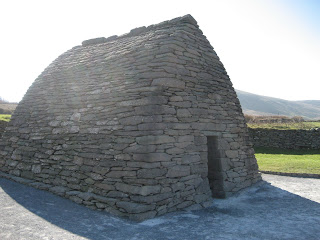
Cahill discusses Saint Patrick, the Vikings, Saint Brigid, the Druids, Christianity, Columcille, and the Book of Kells. This book isn't a fictional walk through a city, but an easy read packed with information. For more on where to find some of the sites discussed in How the Irish Saved Civilization, see Rick Steves' website or read one of his Ireland guidebooks.


Cahill discusses Saint Patrick, the Vikings, Saint Brigid, the Druids, Christianity, Columcille, and the Book of Kells. This book isn't a fictional walk through a city, but an easy read packed with information. For more on where to find some of the sites discussed in How the Irish Saved Civilization, see Rick Steves' website or read one of his Ireland guidebooks.

Thursday, July 23, 2009
Novel Travels: Gone With the Wind
Most people who know the novel and movie Gone With the Wind know that Tara does not exist. I understand though, from reading and studying both as an undergrand (University of Texas, English/Women's Studies course: Women's Popular Genres) that people have gone to Atlanta, Georgia, and asked to see Tara.
Margaret Mitchell based the plantations in GWTW on homes in Clayton County and Jonesboro, which she had seen and visited growing up. Although visiting Tara is impossible, it is possible to get a GWTW fix in Atlanta, Texas, and even Ireland.
Atlanta: To start, GWTW lovers should visit the Margaret Mitchell House where she wrote GWTW. The house gives visitors a glimpse into Mitchell's life, hosts literary events, and has a movie museum (and a gift shop). Mitchell is buried in Oakland Cemetery. There is a Margaret Mitchell square in downtown Atlanta. Those who read the novel may recall Scarlett traveling along Peachtree Street. I feel obligated to warn Atlanta visitors that it seems nearly every street, square, and shopping center is named Peachtree (or so it seemed to this outsider). For other reasons to visit Atlanta, I recommend visiting CNN's studios and the World of Coca-Cola.
The Road to Tara Museum in Jonesboro has a large, permanent collection about GWTW. Or, visitors can take the Southern Belles & Whistles Tour in Jonesboro given by Atlanta Tours.
Marietta has a Gone With the Wind Museum: Scarlett on the Square which has the original honeymoon gown Vivien Leigh wore for the movie, several editions of the novel, and Ona Munson's (Belle) movie script.
Texas: If GWTW lovers are anywhere near Jefferson, Texas, they should visit Scarlett O'Hardy's Gone With the Wind Museum, one of the largest private collections of GWTW memorabilia in existence. It's got movie posters, autographs of stars of GWTW, puzzles, and fabric relating to the book and movie.
In Austin, Texas, the Harry Ransom Center at the University of Texas at Austin has the David O. Selznick Collection and occasionally displays dresses from the movie, however they are not scheduled to be shown again until 2014. Until then, visit the Gone With the Wind Online Exhibit.
Ireland: Speculation has it that Mitchell got the O'Hara plantation name from the Hill of Tara in Ireland. Tara is regarded as the traditional seat of the high kings of Ireland because one could see all of Ireland from the top of the hill (not really, but you can see for miles). OK, it's not really related to GWTW except in name, but it's a fun place to visit.
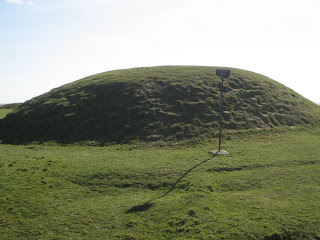
Visiting any of these places will help get a true GWTW lover their fix, until they can take another trip, re-read the novel, or see the movie. (Note: the Paramount in downtown Austin will be showing GWTW over Labor Day Weekend, as part of their Summer Film Series.)
Margaret Mitchell based the plantations in GWTW on homes in Clayton County and Jonesboro, which she had seen and visited growing up. Although visiting Tara is impossible, it is possible to get a GWTW fix in Atlanta, Texas, and even Ireland.
Atlanta: To start, GWTW lovers should visit the Margaret Mitchell House where she wrote GWTW. The house gives visitors a glimpse into Mitchell's life, hosts literary events, and has a movie museum (and a gift shop). Mitchell is buried in Oakland Cemetery. There is a Margaret Mitchell square in downtown Atlanta. Those who read the novel may recall Scarlett traveling along Peachtree Street. I feel obligated to warn Atlanta visitors that it seems nearly every street, square, and shopping center is named Peachtree (or so it seemed to this outsider). For other reasons to visit Atlanta, I recommend visiting CNN's studios and the World of Coca-Cola.
The Road to Tara Museum in Jonesboro has a large, permanent collection about GWTW. Or, visitors can take the Southern Belles & Whistles Tour in Jonesboro given by Atlanta Tours.
Marietta has a Gone With the Wind Museum: Scarlett on the Square which has the original honeymoon gown Vivien Leigh wore for the movie, several editions of the novel, and Ona Munson's (Belle) movie script.
Texas: If GWTW lovers are anywhere near Jefferson, Texas, they should visit Scarlett O'Hardy's Gone With the Wind Museum, one of the largest private collections of GWTW memorabilia in existence. It's got movie posters, autographs of stars of GWTW, puzzles, and fabric relating to the book and movie.
In Austin, Texas, the Harry Ransom Center at the University of Texas at Austin has the David O. Selznick Collection and occasionally displays dresses from the movie, however they are not scheduled to be shown again until 2014. Until then, visit the Gone With the Wind Online Exhibit.
Ireland: Speculation has it that Mitchell got the O'Hara plantation name from the Hill of Tara in Ireland. Tara is regarded as the traditional seat of the high kings of Ireland because one could see all of Ireland from the top of the hill (not really, but you can see for miles). OK, it's not really related to GWTW except in name, but it's a fun place to visit.

Visiting any of these places will help get a true GWTW lover their fix, until they can take another trip, re-read the novel, or see the movie. (Note: the Paramount in downtown Austin will be showing GWTW over Labor Day Weekend, as part of their Summer Film Series.)
Wednesday, July 22, 2009
Novel Travels: France
Today, I have a crying infant and therefore less time to think about this post. I was going to write about Tim Moore's French Revolutions (Tim Moore is the British Bill Bryson), however, I do not have a copy of the book (I got it at the library) and cannot find the info I want online. So, this post is more of a list of books about France and the French that I have found useful when traveling to France. Note: I will not cover Peter Mayle books on this list.
Non-fiction
Portraits of France by Robert Daley - A journalist shows his love of France and its people through various stories about life, wine, and journeys.
Two Towns in Provence by M.F.K. Fisher - Fisher brings Aix-en-Provence alive. Some restaurants she visits are still operating and all the fountains are still there and still enchanting tourists (this one included)
Words in a French Life by Kristin Espinasse - A blog-turned-book about life in Provence, told by introducing a new word a day.
- Another blogger, this one for cooking. Charming.
My Life in France by Julia Child - I've not had time to read this yet, but how can it be bad?
We'll Always Have Paris ... and Provence: A Scrapbook of Our Life in France by Patricia Wells and Walter Wells - I've also not had time to read this yet, but I love Wells' cookbooks.
Dealing with the French people
French of Foe? by Polly Platt - Good for work and pleasure and cutting through bureaucracy.
Touche by Agnes Catherine Poirier - Same, good for work and pleasure.
Sixty Million Frenchmen Can't Be Wrong by Jean-Benoit Nadeau and Julie Barlow - Explains why the French behave the way they do (answer: war and revolution).
Talk to the Snail by Stephen Clarke - I've not read this, but imagine it's his Merde books without the storylines.
French Toast by Harriet Welty Rochefort - Another American in France memoir.
Fiction
A Year in the Merde, In the Merde for Love, Merde Happens, Merde Actually, and Dial M for Merde by Stephen Clarke - Fun airplane reading. A Year in the Merde is the tale of a Brit living in Paris and tiptoeing around strikes, l'amour, and dog crap.
- Everyone learning French reads this.
Chocolat by Joanne Harris - As good as the movie.
For kids books, see Travel for Kids.
For more books, see Rick Steves' list.
Non-fiction
Portraits of France by Robert Daley - A journalist shows his love of France and its people through various stories about life, wine, and journeys.
Two Towns in Provence by M.F.K. Fisher - Fisher brings Aix-en-Provence alive. Some restaurants she visits are still operating and all the fountains are still there and still enchanting tourists (this one included)
Words in a French Life by Kristin Espinasse - A blog-turned-book about life in Provence, told by introducing a new word a day.
- Another blogger, this one for cooking. Charming.
My Life in France by Julia Child - I've not had time to read this yet, but how can it be bad?
We'll Always Have Paris ... and Provence: A Scrapbook of Our Life in France by Patricia Wells and Walter Wells - I've also not had time to read this yet, but I love Wells' cookbooks.
Dealing with the French people
French of Foe? by Polly Platt - Good for work and pleasure and cutting through bureaucracy.
Touche by Agnes Catherine Poirier - Same, good for work and pleasure.
Sixty Million Frenchmen Can't Be Wrong by Jean-Benoit Nadeau and Julie Barlow - Explains why the French behave the way they do (answer: war and revolution).
Talk to the Snail by Stephen Clarke - I've not read this, but imagine it's his Merde books without the storylines.
French Toast by Harriet Welty Rochefort - Another American in France memoir.
Fiction
A Year in the Merde, In the Merde for Love, Merde Happens, Merde Actually, and Dial M for Merde by Stephen Clarke - Fun airplane reading. A Year in the Merde is the tale of a Brit living in Paris and tiptoeing around strikes, l'amour, and dog crap.
- Everyone learning French reads this.
Chocolat by Joanne Harris - As good as the movie.
For kids books, see Travel for Kids.
For more books, see Rick Steves' list.
Subscribe to:
Posts (Atom)

 Posts
Posts


